
Importing into Saudi Arabia is straightforward once the steps are in the right order. Most delays we see come from the same few causes: a product that has no conformity certificate yet, a document that does not match the invoice, or a shipment that arrives before the paperwork. This guide walks through the process as we run it for our clients.
1. Set up as an importer
To import commercially, a company needs an active Commercial Registration (CR) that covers the activity, registration with the Zakat, Tax and Customs Authority (ZATCA), and access to FASAH, the national single window used for customs clearance. Many products also require registration on a regulator's platform before they can enter the Kingdom.
If you do not want to build this in-house, an importer of record or outsourcing partner can import on your behalf under its own registrations.
2. Confirm the product's requirements first
Before you place an order, find out which regulator covers the product:
- SASO, through the SABER platform, covers most industrial and consumer products. Products usually need a Product Certificate of Conformity, and each shipment needs a Shipment Certificate. See our guide to SABER certification.
- SFDA covers food, medicines, medical devices and cosmetics.
- CITC and other authorities cover specific categories such as telecom equipment.
Check the HS code at the same time. It determines the duty rate, any restrictions, and which conformity scheme applies.
3. Choose suppliers and agree the terms
Ask suppliers for specifications, test reports and certificates up front, and agree the Incoterms in writing. With FOB you arrange freight from the origin port; with CIF the supplier pays freight and insurance to the Saudi port; with DDP the seller delivers duty-paid, which only works if they can act as importer in the Kingdom.
Build quality control into the order: approved samples, a pre-shipment inspection for larger orders, and payment terms that link the balance to inspection or shipping documents.
4. Prepare the shipping documents
A standard import file includes:
- the commercial invoice, with an accurate description, HS code, quantities and values;
- the packing list;
- the bill of lading or air waybill;
- the certificate of origin;
- conformity certificates (SABER or SFDA) and any permits the product needs;
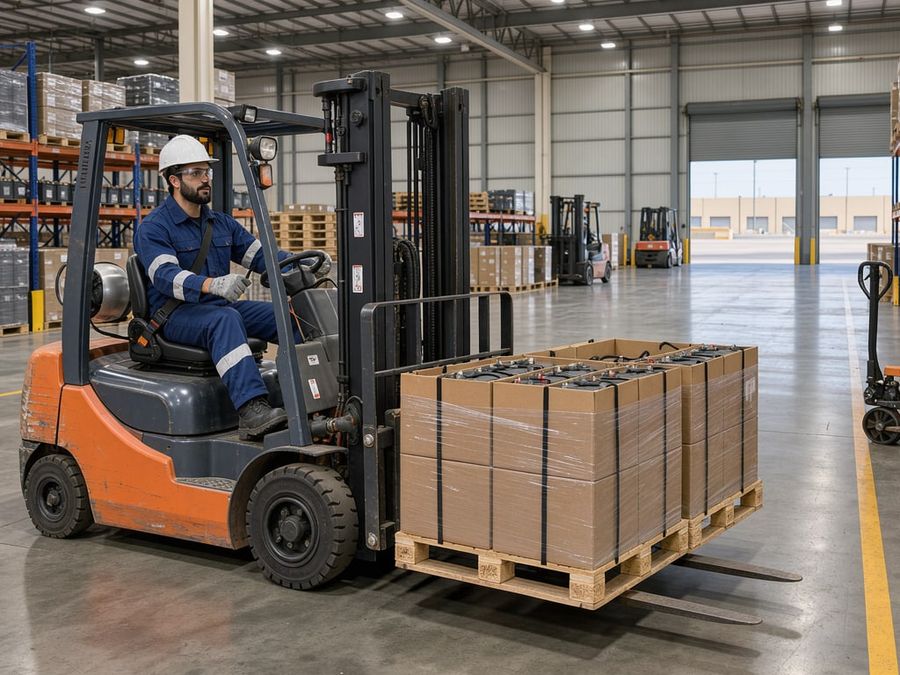
- for batteries and other dangerous goods, the safety data sheet and transport test reports.
Descriptions, quantities and values must match across every document. A mismatch is the most common reason a declaration is held.
5. Ship and clear customs
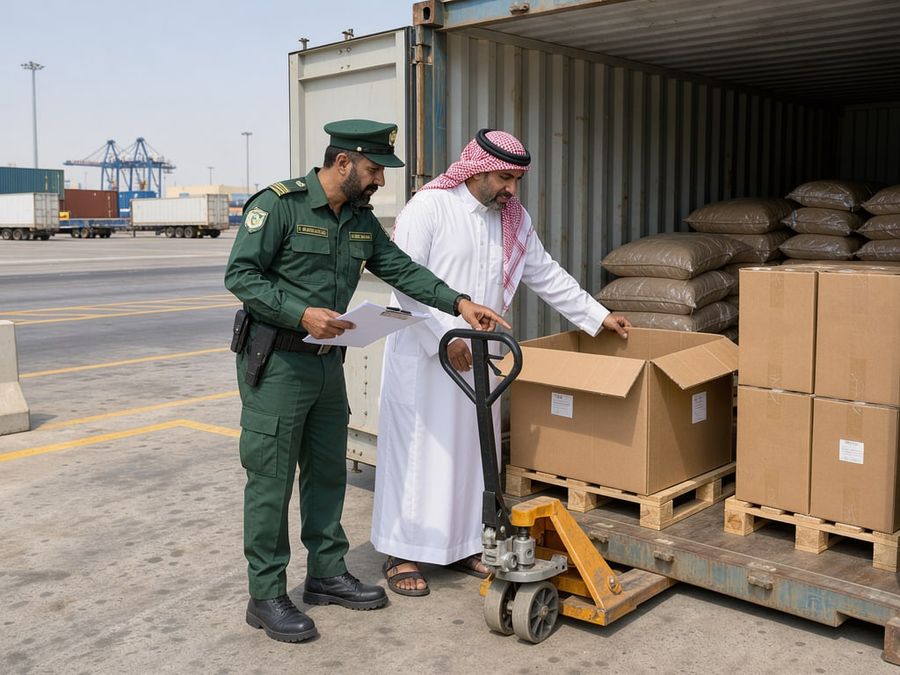
Sea freight from Asia to Jeddah or Dammam usually takes several weeks; air freight takes days but costs far more. Your customs broker files the declaration on FASAH before or on arrival, and the shipment may be inspected.
Customs duty for most goods follows the GCC common external tariff, commonly 5% of the customs value, with some goods exempt or charged at higher rates. VAT at 15% is collected at import. Confirm both for your HS code before you price the order.
6. Deliver to site
Once released, the shipment is collected from the port and delivered to your warehouse or project site. Plan unloading equipment and site access in advance, especially for heavy or oversized cargo.
A checklist before you order
- The product's conformity scheme is confirmed and the certificate is ready or in progress.
- The HS code, duty and VAT are confirmed and included in your landed cost.
- Incoterms, inspection and payment terms are agreed in writing.
- The supplier knows exactly what the invoice and packing list must show.
How we help
Azm Al Safwa manages the full cycle for Saudi companies, giga-projects and government entities: sourcing, documentation, conformity, freight, customs clearance and delivery, under one contract. If you have a requirement, request a quotation and our team will come back within one business day.