Choosing between lithium and lead-acid batteries is rarely about which technology is "better". It is about which one costs less over the life of your equipment, in your duty cycle and in Saudi heat. This guide compares lithium iron phosphate (LiFePO4), the most common lithium chemistry for industrial use, with flooded, AGM and gel lead-acid batteries.
The short answer
- Choose lithium (LiFePO4) for equipment that cycles every day, needs fast or opportunity charging, or where downtime and maintenance are expensive: forklifts, solar and energy storage, telecom sites.
- Choose lead-acid where the battery mostly stands by, budgets favour a low upfront price, or the application is engine starting: many UPS rooms, backup systems and vehicle starting batteries.
How they compare
- Cycle life: LiFePO4 typically lasts several thousand cycles; lead-acid several hundred to around a thousand.
- Usable capacity: LiFePO4 delivers most of its rated capacity; lead-acid is usually limited to about half to protect its life.
- Charging: LiFePO4 charges fast and partial charges do no harm; lead-acid charges more slowly and needs regular full charges.
- Maintenance: LiFePO4 needs almost none; flooded lead-acid needs water top-ups and equalising charges.
- Weight: LiFePO4 is much lighter for the same energy.
- Upfront price: lead-acid is lower; LiFePO4 is higher.
Figures vary by manufacturer, temperature and how the battery is used, so always compare datasheets for the exact models you are considering.
Heat changes the calculation
High temperatures speed up chemical ageing in every battery, and lead-acid is especially sensitive: a battery that lives in a hot, unventilated room can lose a large share of its expected life. In the Kingdom, that makes ventilated or air-conditioned battery rooms worthwhile for any chemistry.
LiFePO4 is thermally stable and tolerates heat better than lead-acid, and its battery management system (BMS) protects cells from over-temperature and over-charge. It still performs best within its rated temperature range, so placement and cooling matter for both.
Look at total cost of ownership
A lithium battery can cost two to three times as much upfront, but it often lasts several times as many cycles, uses more of its capacity and needs almost no maintenance. To compare fairly, estimate for each option:
- the purchase price and number of replacements over ten years;
- the energy lost in charging (lithium is more efficient);
- maintenance labour and, for forklifts, spare batteries and changing time;
- downtime when a battery fails or runs flat mid-shift.
For multi-shift forklifts and solar storage, lithium usually wins on this basis. For standby UPS that rarely discharges, lead-acid often remains the economical choice.
Application notes
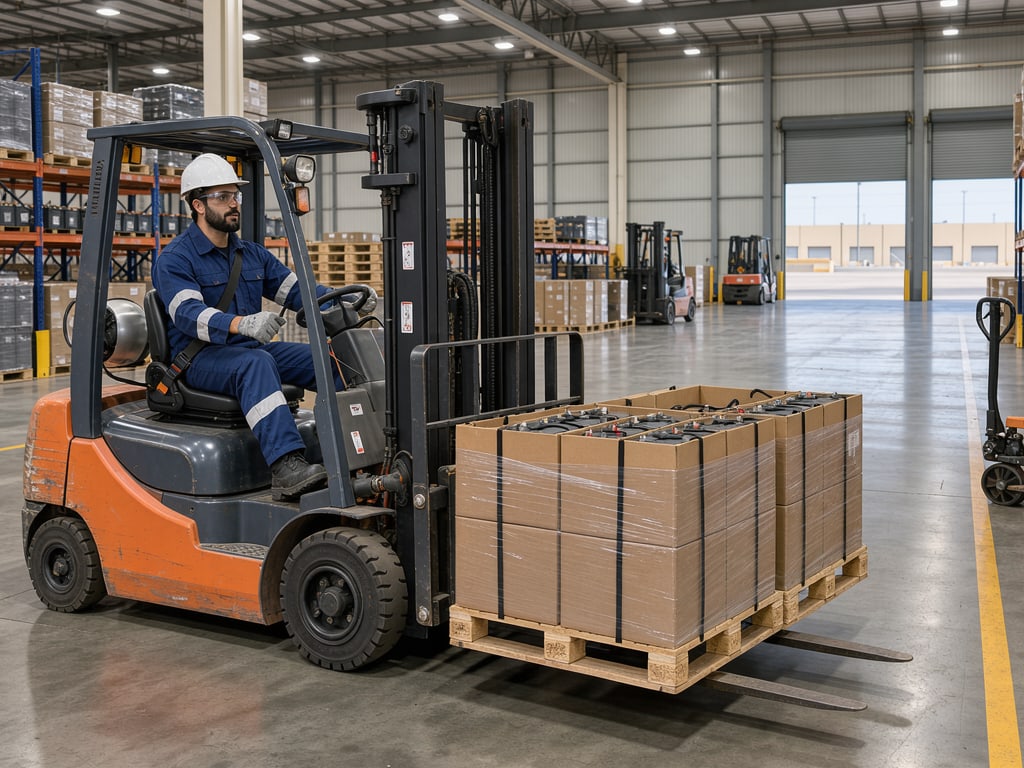
- Forklifts and material handling: lithium allows opportunity charging during breaks, removing battery swaps and charging rooms.
- UPS and data rooms: sealed lead-acid (VRLA) remains common; lithium saves space and lasts longer where budgets allow.
- Solar and energy storage: daily deep cycling strongly favours LiFePO4.
- Vehicles and heavy equipment: lead-acid starting batteries remain standard; lithium is growing for auxiliary power.
Importing batteries into Saudi Arabia
Lithium batteries ship as dangerous goods, so the supplier must provide a safety data sheet and UN38.3 transport test reports, and packaging must follow dangerous-goods rules. Batteries also need the relevant SABER conformity certificates before customs clearance.
How we help
We supply industrial batteries, both lithium and lead-acid, from vetted manufacturers, with the documentation and certification handled. Share your application, voltage and capacity and our team will recommend the right technology and quote a delivered price.